Amir Long · 17 October 2026
Decoding Feedback Loops in Expert Communities and Their Effect on Platform Algorithms
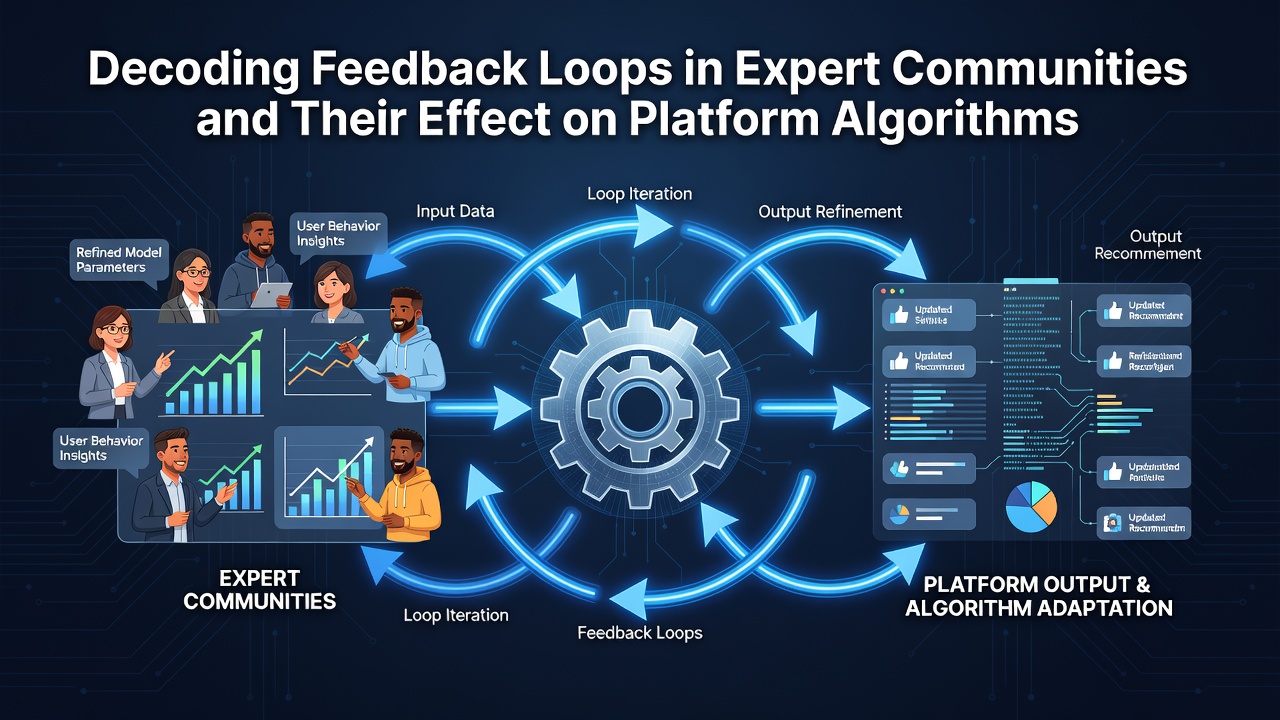
Expert communities on digital platforms generate feedback loops when members interact with content through upvotes, detailed comments, and shares that algorithms then interpret as signals of value, which leads platforms to amplify similar material to wider audiences and creates cycles where initial engagement patterns reinforce themselves over time. These dynamics appear across professional networks, technical forums, and specialized discussion groups where participants hold recognized expertise in fields such as software development, medical research, and engineering standards. Data from platform studies show that recommendation systems adjust rankings based on aggregated user signals collected within these groups, and the resulting visibility changes affect which contributions reach broader user bases.
Formation of Expert Communities on Platforms
Communities form when individuals with domain knowledge gather in dedicated spaces such as subreddit threads, LinkedIn groups, or Stack Exchange sites, and their repeated interactions establish norms around what constitutes high-quality input. Researchers tracking these environments note that early participants set precedents through consistent responses that later members adopt, which produces measurable patterns in engagement metrics. In October 2026, platform dashboards from major services recorded increased activity within technical subgroups as professionals returned to refine documentation and troubleshoot emerging issues in artificial intelligence tooling. Such sustained participation supplies the raw data that algorithms require to identify trending topics and surface them to additional users.
Mechanisms Driving Feedback Loops
Feedback begins when an expert posts a detailed analysis or code snippet, and fellow members respond with votes or follow-up questions that accumulate into higher scores. Algorithms interpret these scores as indicators of relevance and adjust distribution accordingly, which exposes the original material to new viewers who may add their own contributions. This sequence repeats as each round of interactions updates the underlying models, and studies of recommendation engines confirm that clusters of expert activity create localized spikes in content promotion. Observers note that negative signals such as downvotes or reports can dampen visibility just as quickly, which establishes counterbalancing forces within the same system.
Impact on Platform Algorithms
Algorithms incorporate community-derived signals into ranking formulas that prioritize content demonstrating rapid initial traction, and this practice extends reach for posts originating inside expert circles while limiting exposure for contributions that receive slower responses. Evidence from algorithmic audits reveals that platforms apply weighting factors derived from engagement velocity, and expert communities often produce the steepest early curves because participants possess shared vocabulary and evaluation criteria. The result appears in search results and news feeds where certain technical discussions dominate for extended periods before new input shifts the equilibrium. One documented case involved a network security thread that maintained top placement across multiple services after successive waves of expert validation reinforced its position.
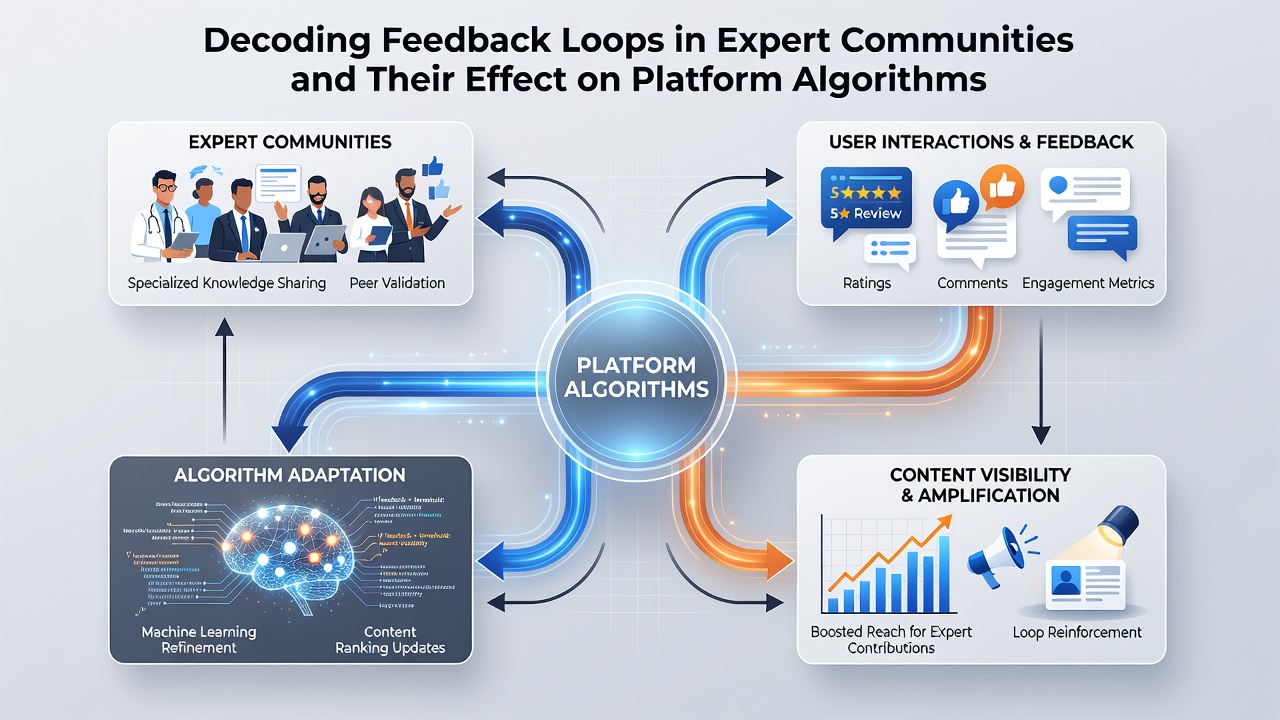
Platform operators adjust their models periodically to account for these concentrated influence points, yet the underlying data streams continue to reflect the activity levels inside expert groups. Research published by the OECD indicates that network effects within specialized communities can account for measurable portions of content amplification across global user bases. At the same time, reports from the Australian Competition and Consumer Commission highlight how concentrated engagement patterns influence the fairness of automated distribution on large digital marketplaces.
Observable Patterns in Content Reach
Content originating from expert communities tends to exhibit longer persistence in recommendation queues because sustained discussion threads keep engagement metrics elevated, and this persistence allows secondary effects such as cross-posting to other groups to develop. Analysts examining performance logs find that topics first vetted inside expert forums later appear in general feeds with higher baseline scores than material introduced without prior scrutiny. The pattern holds across regions where language and cultural factors differ, which suggests the mechanism operates independently of specific platform interfaces.
Conclusion
Feedback loops in expert communities supply structured data that platform algorithms use to refine content distribution, and the resulting amplification cycles shape which contributions achieve prominence across digital ecosystems. Ongoing monitoring of engagement statistics continues to reveal how these interactions evolve alongside updates to recommendation systems.